A Quantum Shift in Energy Storage
The race to develop next-generation electric vehicle batteries has entered a defining moment. A breakthrough in solid-state battery technology is pushing the boundaries of energy density, charging speed, and safety.
Chinese automaker Chery Automobile recently introduced a prototype solid-state battery with an energy density of 600 Wh/kg, nearly twice that of today’s best lithium-ion systems. This advance could enable electric vehicles to travel up to 800 miles on a single charge, reshaping expectations for what EVs can deliver.
Why Energy Density Changes Everything
Energy density, measured in watt-hours per kilogram (Wh/kg), represents how much energy a battery can store relative to its weight. Higher density translates directly into greater range and improved performance.
Most modern EV batteries operate between 200 and 260 Wh/kg, such as Tesla’s nickel-cobalt-aluminum (NCA) packs. Doubling that figure means smaller, lighter batteries with longer driving ranges and faster recharging. Chery’s breakthrough suggests that next-generation EVs could rival or even surpass the practicality of gasoline cars.
A Safer, More Stable Power Source
Safety has long been a critical barrier to battery innovation. Solid-state systems replace flammable liquid electrolytes with stable solid materials, dramatically reducing the risk of fires.
Chery’s prototype performed flawlessly in nail-penetration and power-drill tests, remaining stable without combustion or smoke. These results highlight how solid-state chemistry can eliminate one of the most persistent concerns about lithium-ion technology.
The company plans to begin pilot production in 2026, with full-scale manufacturing targeted for 2027. If successful, it would mark one of the first large-scale deployments of solid-state batteries in the global automotive market.
Global Momentum Builds
Chery is not alone in this race. Around the world, leading automakers and technology firms are investing heavily in solid-state development. Toyota currently holds more than 1,700 patents for solid-state innovations and is working with Idemitsu Kosan to launch its first production models by 2027.
Other key players, including BYD, CATL, and QuantumScape, are developing their own high-density prototypes and exploring new materials that promise greater stability and lower costs. Each breakthrough moves the industry closer to mass adoption, creating a competitive global landscape for battery leadership.
Engineering the Future: Challenges and Payoffs
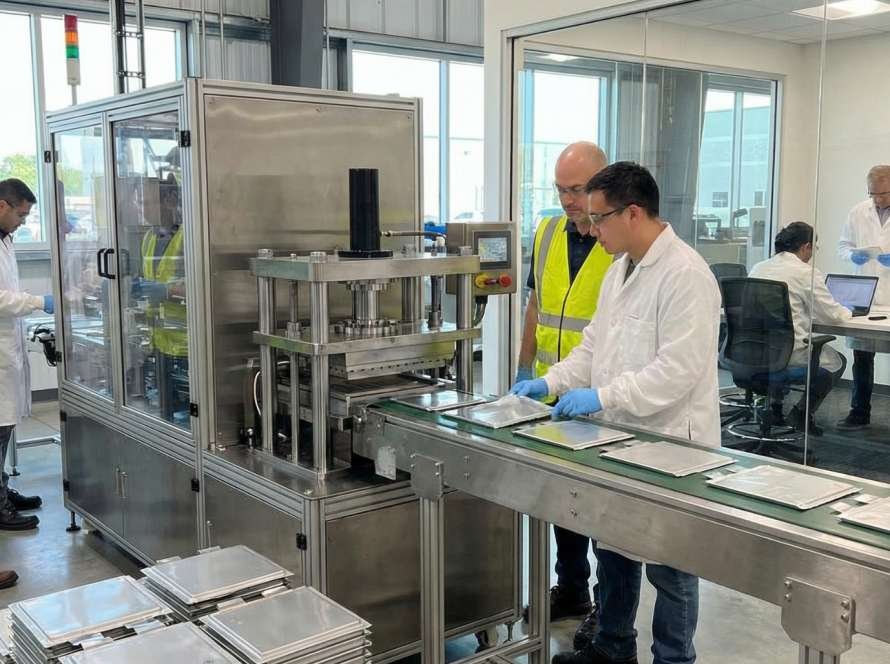
Building a reliable solid-state battery has required overcoming major technical and economic hurdles. The technology relies on sulfide-based solid electrolytes that are both expensive and difficult to produce consistently. Current production costs remain two to three times higher than conventional lithium-ion cells because of material complexity and lower manufacturing yields.
Yet the benefits are significant. Solid-state batteries promise:
- 4–6x faster charging speeds than liquid-electrolyte systems
- Double the energy density, enabling lighter, longer-range EVs
- Improved lifespan with slower capacity degradation
- Enhanced safety thanks to non-flammable components
As economies of scale reduce costs, these advantages could make solid-state batteries the standard for everything from cars to aircraft and renewable-energy grids.
A New Era of Electric Mobility
Chery’s prototype marks a clear turning point for the EV sector. With energy density reaching 600 Wh/kg and proven resistance to damage and overheating, solid-state batteries are transitioning from experimental to commercially viable technology.
If pilot programs meet expectations, EVs could soon travel 800 miles between charges, recharge in minutes, and operate with near-zero fire risk. The shift would redefine performance, range, and reliability, accelerating the global transition to clean transportation.
This is more than an incremental upgrade. It represents the dawn of a battery revolution capable of powering the next generation of mobility and reshaping the future of energy itself.