The first week of March 2026 has fundamentally altered the performance benchmarks for electric mobility. For the C-suite, the “good news” is the collapse of the two primary barriers to mass adoption: range anxiety and charging downtime. We have officially entered the era of the 1,000 kilometer range and the sub-ten-minute charge.
1. BYD’s Blade 2.0: The End of Charging Friction
On March 5, 2026, BYD unveiled its second-generation Blade Battery alongside a revolutionary 1.5 MW Flash Charging system. This technology represents the most significant leap in LFP (Lithium Iron Phosphate) chemistry in a decade.
- Performance: The new battery supports a range of over 1,036 km (CLTC) on a single charge.
- The 5-Minute Mandate: Utilizing “Flash-Release” cathode architecture, the battery can charge from 10% to 70% in just 5 minutes.
- Thermal Resilience: Even at extreme temperatures of -30°C, the system recharges from 20% to 97% in roughly 12 minutes, solving one of the most persistent pain points for EVs in colder climates.
2. Solid-State Mobility: The 500 Wh/kg Threshold
While BYD optimizes LFP, the race for all-solid-state batteries (ASSB) has hit a commercial pivot point this week.
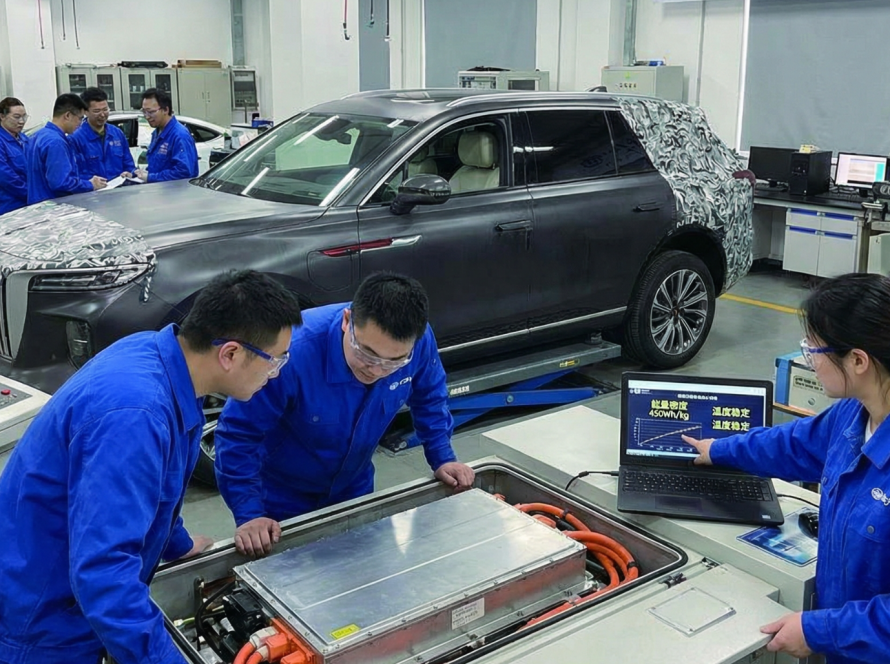
- The Nankai Milestone: Researchers at Nankai University, in collaboration with China Auto New Energy Battery Technology, successfully tested a solid-state system in a real vehicle reaching a range of 1,000 km. The battery cells achieved an energy density exceeding 500 Wh/kg, more than double that of current industry standards.
- Samsung SDI’s Vision: At the InterBattery 2026 event on March 2, Samsung SDI unveiled its “AI-Battery” roadmap. The firm is transitioning into the pilot phase for mass production slated for late 2027, focusing on high-power, high-safety cells designed for both EVs and the growing humanoid robotics market.
- Toyota’s 2026 Factory: Toyota has confirmed the 2026 construction of a 10 GWh solid-state battery facility in Japan. This plant will prioritize initial capacity for high-end Lexus models, aiming for a 1,200 km range with a 10-minute charge.
3. Sodium-Ion: The Takeoff of Dual Chemistry
2026 is being hailed as the year sodium-ion batteries transition from a laboratory promise to an industrial reality.
- Mass Market Penetration: The first mass-produced cars using sodium-ion batteries have arrived at dealerships this week. With energy densities now reaching 160 to 175 Wh/kg, sodium is being positioned as the primary solution for urban commuters and the $25,000 EV segment.
- US Commercialization: Natron Energy has become the first US firm to produce sodium batteries at commercial scale at its Michigan plant, targeting data centers and the AI power surge.
Strategic Hurdles for the C-Suite
As these technologies scale, leadership teams must navigate three primary operational shifts:
- Infrastructure Compatibility: The 1.5 MW charging capacity of the Blade 2.0 requires a new class of “Flash Charging” stations. Procurement teams must ensure future charging networks can handle these ultra-high power flows.
- Chemistry Agility: With the rise of “dual chemistry” (lithium for range, sodium for cost), fleet managers must adopt software that can optimize performance across heterogeneous battery types.
- Safety Frameworks: The new 1,000 km batteries utilize five-dimensional safety frameworks (thermal, electrical, mechanical, gas, and fire protection). This data-rich safety approach is now a prerequisite for institutional insurance and public transit contracts.
The Bottom Line
The shift in EV battery technology this week marks the end of the “limited range” era. With the arrival of 500 Wh/kg solid-state samples and 5-minute charging LFP packs, the industry has solved the primary technical hurdles to total fleet electrification. For the C-suite, the priority has moved from monitoring chemistry to securing the high-power grid access and thermal management software required to support these high-performance assets.