In January 2026, China FAW Group reached a pivotal milestone in the global race toward next-generation electric vehicle technology. The successful rollout of Hongqi’s first all-solid-state battery prototype vehicle marks the transition of solid-state innovation from laboratory research to real-world vehicle validation-a moment with far-reaching implications for the automotive and energy storage industries.
For global automotive executives, battery manufacturers, and technology investors, this development signals more than technical progress. It reflects a strategic inflection point in how future EV platforms may be designed, validated, and commercialized.
From Lab Success to Vehicle Integration
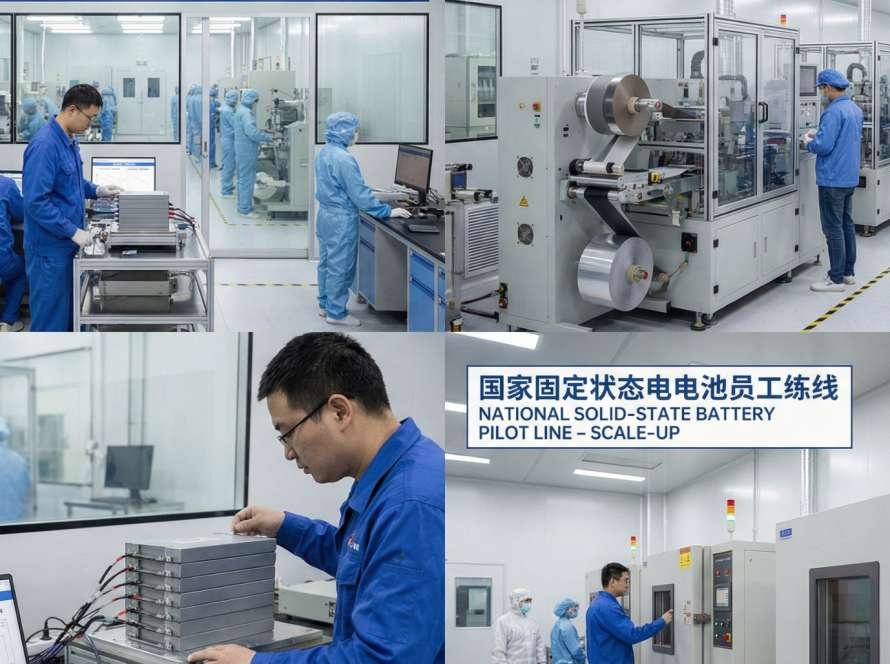
After an intensive 470-day R&D cycle, FAW’s engineering teams achieved multiple phased breakthroughs across the most critical elements of solid-state battery development. The company’s focus on sulphide-based electrolytes, scalable 60Ah automotive-grade cells, and manufacturability has culminated in a 66Ah all-solid-state battery cell now installed in a prototype vehicle.
This step-moving from isolated cell testing to full vehicle integration-represents one of the most challenging hurdles in solid-state battery development. It confirms that FAW’s technology is no longer theoretical, but functionally viable within a vehicle architecture.
Safety and Performance at the Forefront
One of the defining advantages of all-solid-state batteries is enhanced safety, and FAW’s results underscore this promise. The installed battery successfully passed a thermal abuse test at 200°C, demonstrating exceptional thermal stability under extreme conditions-an area where conventional liquid-electrolyte batteries face inherent risks.
Equally significant is the performance of FAW’s sulphide electrolyte material, which achieved ionic conductivity exceeding 10 mS/cm, a widely recognized benchmark for high-performance solid-state systems. This performance threshold lays the groundwork for faster charging, higher power output, and improved efficiency, all of which are essential for mass-market EV adoption.
Why This Matters for the Global EV Industry
All-solid-state batteries are widely viewed as a cornerstone technology for the next decade of electrification, offering the potential for:
- Higher energy density, enabling longer driving ranges
- Superior safety, eliminating flammable liquid electrolytes
- Longer battery lifecycles, improving total cost of ownership
- Design flexibility, unlocking new vehicle architectures
FAW Hongqi’s prototype vehicle demonstrates that these benefits are no longer confined to research roadmaps. As global automakers race to differentiate on performance, safety, and sustainability, solid-state batteries are increasingly becoming a competitive necessity rather than a future option.
Read About EV Battery Technology Xchange 2026 conference covering lithium-ion innovation, solid-state batteries, gigafactory scale-up, and recycling
China’s Expanding Role in Battery Innovation
FAW’s achievement also reinforces China’s growing leadership in advanced battery technologies. As regulatory pressure, cost competition, and consumer expectations rise globally, Chinese OEMs are accelerating the commercialization of next-generation solutions-often at a pace that reshapes global benchmarks.
By initiating real-vehicle testing, FAW is not only validating its own technology but also contributing valuable operational data that will accelerate industry-wide learning curves in solid-state battery deployment.
A Signal, Not a Finish Line
FAW has been clear that this milestone marks the beginning-not the end-of the commercialization journey. The upcoming testing phase will focus on durability, reliability, and system-level performance under real operating conditions, all critical prerequisites for future mass production.
For C-level leaders across automotive, energy, and advanced manufacturing sectors, the message is clear: the solid-state era is moving closer to reality. Companies that align R&D, supply chains, and strategic partnerships around this transition today will be better positioned to lead tomorrow’s EV market.